

Parliament
AFTER 13 YEARS, A WOMAN FINALLY SITS AT THE TOP TABLE OF CAMEROON'S UPPER HOUSE

Njila Boris
March 2026
2 min read
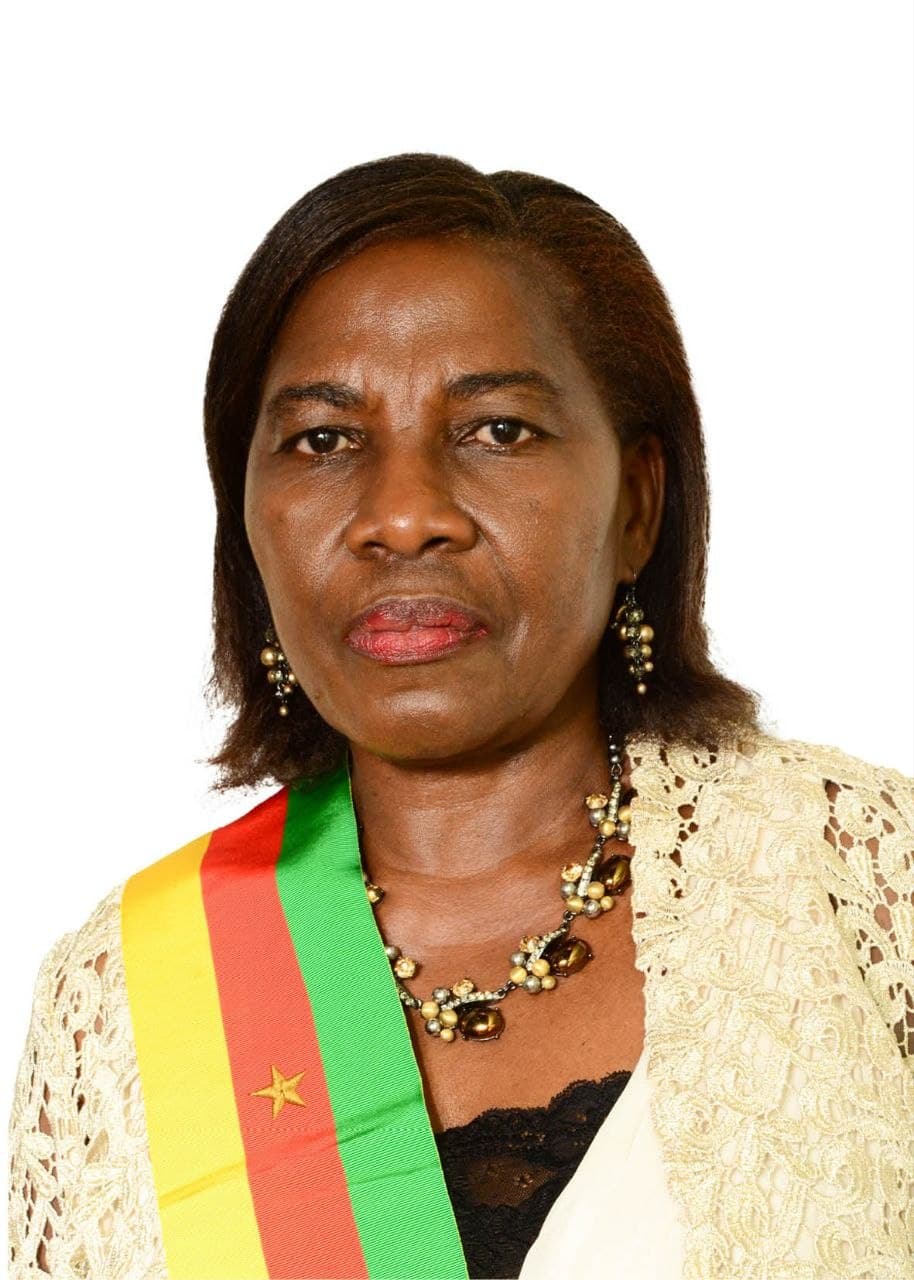
In a chamber that has existed for just over a decade, Tuesday's bureau elections at the Senate produced more than a routine renewal of leadership. They produced a first. And firsts, in institutions as slow-moving as upper houses of parliament, are never insignificant.
Naomie Begala Mikel Akono, senator representing the East Region under the banner of the ruling RDPC, was elected First Vice President of the Senate, becoming the first woman to hold that position since the institution held its inaugural session in 2013. She secured 83 votes out of 84 ballots cast, a result that left little room for ambiguity. The chamber had made up its mind.
She was not exactly a stranger to the Senate's corridors. Begala Mikel had previously served as a Secretary of the Bureau and sat on the Committee on Cultural, Social and Family Affairs during her first term as senator. She had been present at the institution's early years, learning its rhythms and building the kind of quiet credibility that tends to precede elevation. But nothing in her previous role quite prepared the public for the scale of Tuesday's step forward.
Her path to the perchoir is rooted not in party manoeuvring alone but in a career that spans decades of Cameroonian diplomacy. Born on 11 August 1963 in Yenga-Moloundou in the Boumba-et-Ngoko department, she trained at the Cameroon Institute of International Relations, graduating in 1991 with a doctorate in international relations. She entered the Ministry of External Relations that same year, beginning at the bottom of the diplomatic ladder as a protocol officer before rising steadily through the ranks.
Her ascent through the foreign service took her all the way to the United States, where she served in Cameroonian embassies in both New York and Washington DC between 2002 and 2017, holding the rank of Second and subsequently First Counsellor. Those fifteen years on the frontlines of multilateral diplomacy gave her an exposure to international institutions and a fluency in the language of state that few of her parliamentary colleagues can match. She returned home in 2017 to serve as Director of Cameroonians Abroad, Foreigners in Cameroon, Refugees and Migration Affairs, a role that placed her at the intersection of diaspora policy, migration governance and national identity.
Her election is also a signal. President Paul Biya, sworn in for his eighth term of office on 6 November 2025, made the promotion of women and youth one of the stated cornerstones of his new mandate. In his inaugural address before parliament, the Head of State was explicit, declaring that his action throughout the seven-year term would focus centrally on the situation of young people and women, with greater empowerment and protection as key objectives. His electoral manifesto had similarly committed to the integration of women into economic and political life as a governing priority.
Begala Mikel's election to the second highest position in the Senate can be read, in that light, as the upper house of parliament giving institutional flesh to a presidential vision. Whether by design or convergence, the timing is not accidental.
She takes up her new role alongside Senate President Aboubakary Abdoulaye, whose own election on the same day marked a parallel chapter of renewal at the top of Cameroon's parliament. Together, they lead a chamber that now looks, at least at the summit, somewhat different from the one that was assembled in 2013.
For a country where women remain underrepresented in the highest offices of state despite constituting over half the population, Naomie Begala Mikel Akono's election does not resolve a structural problem. But it does, undeniably, move a marker. In the Senate's short history, no woman had climbed this high before Tuesday. That is no longer true.