

Parliament
NATIONAL ASSEMBLY ADOPTS BILL to EXTEND THEIR MANDATE

Njila Boris
March 2026
2 min read
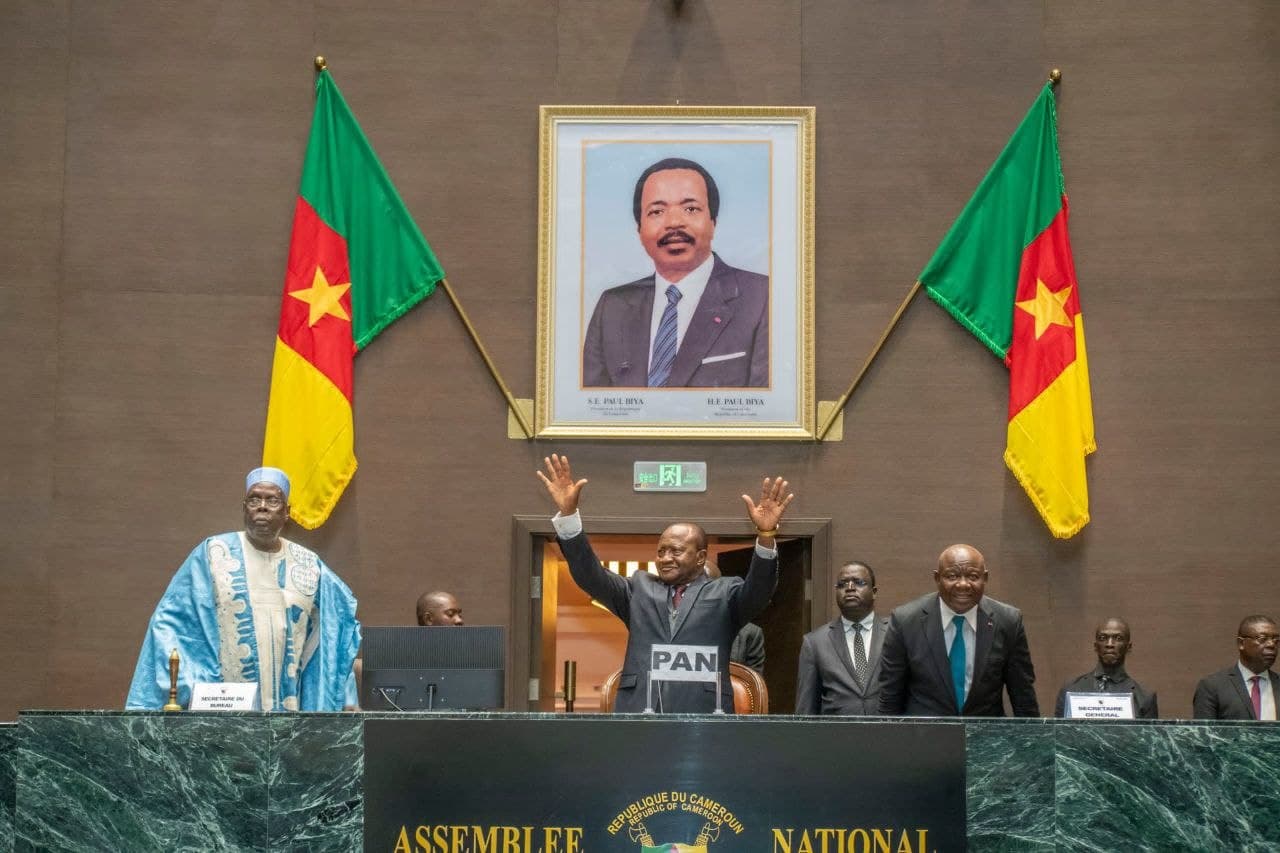
It was, by any measure, a significant moment for the newly installed leadership of the National Assembly. In his first plenary sitting as Speaker, Théodore Datouo presided over the adoption of Bill No. 2092/PJL/AN, extending the mandate of Members of the National Assembly from 31 March to 20 December 2026. The bill passed, and with it, the lower house of Cameroon's parliament secured nine additional months in office.
The sitting opened with the presentation of the committee report by Honourable Ghimbop Joséphine épse Simo, rapporteur of the Committee on Constitutional Laws, who summarised the findings of the previous day's committee examination. Her intervention set the stage for what would become one of the more animated exchanges the new assembly has witnessed since its bureau was constituted.
Before the bill came to a vote, eight members of parliament took to the rostrum to seek clarifications from François Bolvine Wakata, Minister Delegate at the Presidency in charge of Relations with the Assemblies. The interventions came from Honourable Jean Michelle Nintcheu, Honourable Ngo Issi Rolande, Honourable Nourane Fotsing, Honourable Nkodo Dang Roger, Honourable Djeumeni Benilde, Honourable Manju Nestus, Honourable Nbouangouere Rainatou and Honourable Njong Evaristus. Each sought to press the government representative on various aspects of the bill, from its constitutional basis to the practical implications of a second consecutive extension of parliamentary mandates.
Bolvine Wakata responded to each query in turn, defending the government's position on grounds of financial constraints and the need for electoral authorities to better prepare for the organisation of the twin legislative and municipal elections.
Speaker Datouo was assisted throughout the sitting by Honourable Bara Julien, Secretary of the Bureau, and Secretary General André Noël Essian, whose institutional experience provided the procedural backbone of a sitting that carried considerable political weight.
The adoption of this bill marks the first legislative act of the Datouo speakership. That it involved a vote on the duration of the lawmakers' own mandate gives the moment an unavoidable complexity. Parliamentarians were, in effect, legislating on their own tenure, a situation that the constitution permits but that civil society and some opposition voices have continued to view with unease.
What is now clear is that Cameroon's 10th legislature, elected in February 2020 for a five-year term, will remain in place until 20 December 2026 at the earliest, pending the organisation of the awaited twin elections. The bill now moves to the Senate for a corresponding vote before it can be promulgated into law.
The clock has been reset. The campaign season, whenever it formally begins, will unfold under the watch of a parliament that has just bought itself more time.