

Politics
NTUMFOR FRU JONATHAN CALLS FOR PARTY DISCIPLINE AT CPDM MEZAM II SANTA DURING JOINT SECTION CONFERENCE

Njila Boris
March 2026
2 min read
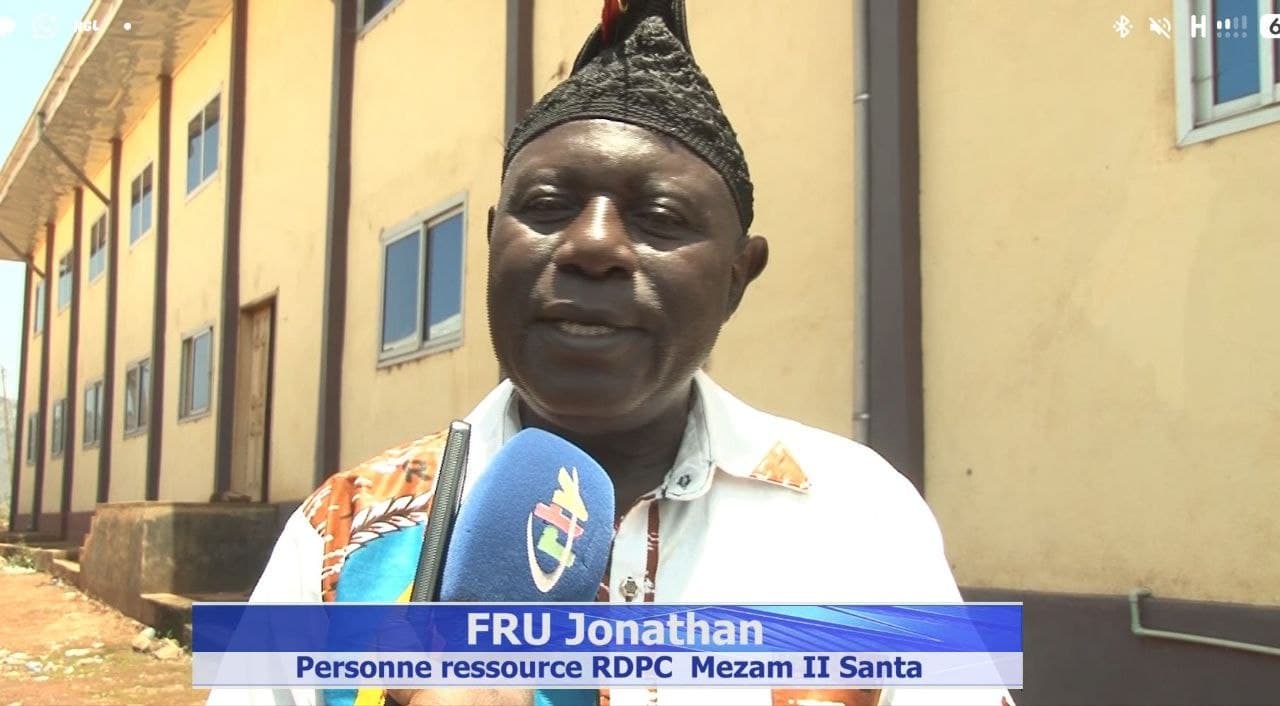
In a room full of militants preparing for an electoral battle, Ntumfor Fru Jonathan chose to begin not with a rallying cry but with a question. What exactly does party discipline mean in the CPDM ? Where does it apply ? Who does it concern ? And how is it enforced ? His presentation at the Mezam II Santa Joint Section Conference was built around those four questions, and the answers he provided were both instructive and, at moments, uncomfortably candid.
Fru Jonathan defined party discipline as the ability of a political party to ensure that its members, whether in parliament, in council or on the ground, work according to the official party line to guarantee cohesion. He was quick to add that the CPDM operates differently from all other parties, with its own internal logic anchored in the vision of National Chairman President Paul Biya, as expressed in his foundational text Communal Liberalism. Article 31 of the CPDM constitution is unambiguous : it is a disciplinary offence for any member to act in isolation of the party's objectives or to refuse to apply decisions taken by its organs. Discipline, he reminded the audience, is a constitutional obligation, not a vague expectation.
His list of acts constituting indiscipline was extensive and pointed. Voting against the party, publicly criticising the hierarchy, putting personal ambitions before party interest, absence of accountability, corruption in candidate designation processes and failure to hold statutory meetings all featured prominently. He also identified the conditions that breed indiscipline : poor knowledge of party texts, exclusion of local officials from party affairs and violations of internal protocol.
That last category carried particular weight. The CPDM's most damaging internal conflicts have historically arisen not during campaigns against the opposition but during candidate designation, when personal ambitions and financial inducements fracture grassroots unity. The disciplinary committee has been activated repeatedly to address such cases. Following the 2020 legislative and municipal elections, the committee passed verdicts on members who violated hierarchy instructions on mayoral candidates and made anti-party statements in the media. More recently, the November 2025 regional council elections generated fresh friction in several regions, with militants openly acting against party candidate lists. The consequences of those actions were still being processed as the Santa conference convened, a reminder that the committee's work never truly stops between election cycles.
The party has also demonstrated that no rank confers immunity. The National President has on record signed off on the permanent exclusion of Central Committee members for acts of indiscipline, a signal that the hierarchy's reach extends to the very top of the party's internal structure.
On sanctions, Fru Jonathan cited article 33 of the constitution directly. The range runs from a simple warning through reprimand, suspension, removal from office, dissolution of basic organs and temporary or permanent expulsion. The final word, always, lies with the National Chairman.
He closed on a note of institutional pride. The CPDM, he said, remains the most disciplined party in Cameroon since the return of multiparty politics, and behind every electoral victory over four decades stands one constant : the cohesion of a party that at national level has never lost an election.
In Mezam II Santa, with twin elections approaching and candidate designation processes expected to generate their usual internal pressures, his message was timely. Discipline, as Fru Jonathan framed it on Saturday, is not merely an internal virtue. In a region where the CPDM has faced its share of internal fractures, it is a strategic weapon. And one the section cannot afford to leave unused.