Gabon's National Assembly Partners With the Parliamentary Assembly of La Francophonie to Deepen Legislative Oversight Capacity
By Ebika Mofor · 7/9/2026
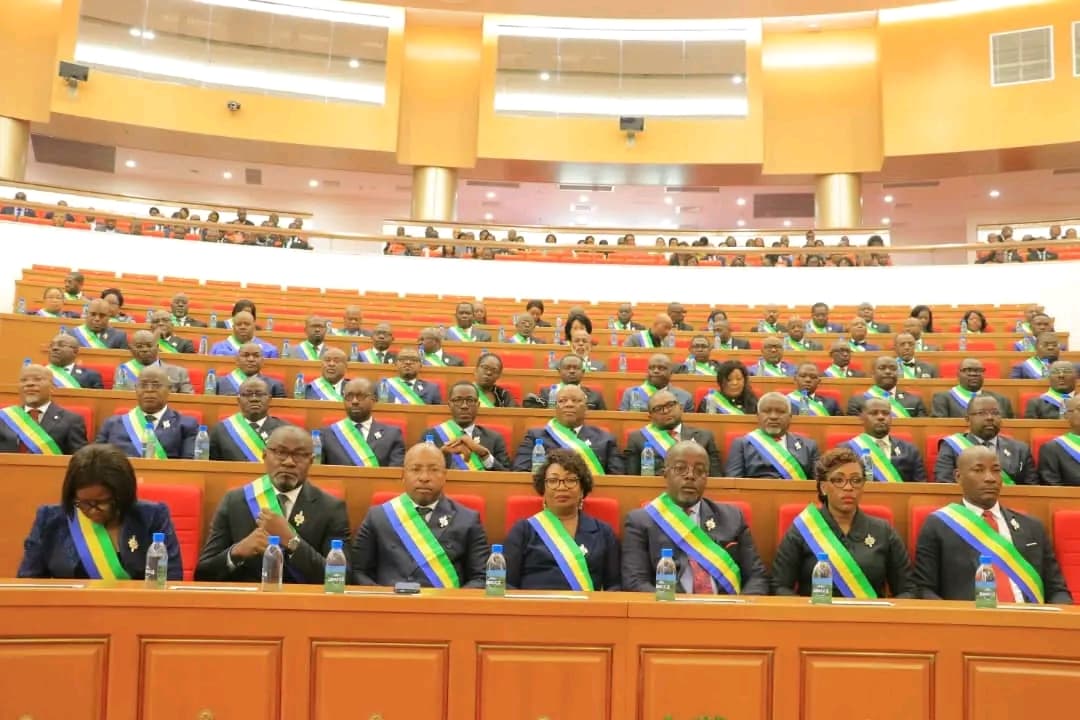
The Palais Léon Mba, seat of the National Assembly of the Gabonese Republic, was the venue of a high-level parliamentary capacity building seminar on June 10, 2026, bringing together members of both chambers of the Gabonese parliament for an intensive day of training and experience sharing devoted to the evaluation of public policies, one of the most consequential yet frequently underexercised functions of modern legislatures across the African continent. The initiative, organised by the National Assembly of Gabon in partnership with the Parliamentary Assembly of La Francophonie, was designed to equip Gabonese deputies and senators with the conceptual frameworks, methodological tools, and practical competencies necessary to move beyond routine budgetary compliance checks toward a more rigorous, results-oriented scrutiny of government action in the service of citizens.
The opening ceremony was presided over by the Fourth Vice-President of the National Assembly, the Honourable Roland Matsiendi, representing the President of the institution, Michel Régis Onanga M. Ndiaye, whose absence did not diminish the institutional weight lent to the proceedings by his deputy. In his opening address, the Honourable Roland Matsiendi underscored the imperative for elected representatives to equip themselves with modern and effective tools capable of measuring the real impact of public policies on the populations they serve. He framed the seminar not as a technical exercise but as a democratic necessity, situating it within a context marked by growing citizen demands for performance, transparency, and accountability from public institutions at every level of governance.
Among the distinguished experts who addressed the Gabonese parliamentarians, the participation of the Honourable Joshua Osih, Member of Parliament for the Wouri Centre Constituency in the Littoral Region of Cameroon, drew particular attention and generated substantive engagement from participants. The Cameroonian lawmaker, who serves simultaneously as National Chairman of the Social Democratic Front and one of the most outspoken voices in Cameroon's parliament on issues of governance and institutional reform, delivered a presentation on the theme "Why Does Parliamentary Evaluation of Public Policies Matter for Democracy?" His intervention placed the question of parliamentary oversight at the heart of democratic governance, arguing that a parliament which limits itself to voting budgets without subsequently measuring their outcomes against stated objectives is a parliament that has abdicated one of its most fundamental democratic responsibilities. He illuminated the central role of the legislature in assessing the results of government action and in holding the executive to account for the quality and effectiveness of its delivery, making the case for an oversight culture grounded not in political contestation alone but in evidence, methodology, and a genuine commitment to improving the lives of citizens. The fact that the Gabonese parliamentarians subsequently recommended Cameroon as one of three African parliaments whose experience in public policy evaluation merits direct study missions underscores the regional credibility that Cameroon's legislature has accumulated in this domain.
The seminar also benefited from the contributions of Dr. Mamadou Yauck, Special Adviser to the President of the National Assembly of Senegal, who presented the theoretical and methodological foundations of parliamentary public policy evaluation, providing participants with a rigorous analytical framework for understanding the mechanisms, tools, and principles that underpin effective legislative oversight. Petit Lambert Ovono, Head of the Public Policy Evaluation Department at the Presidency of the Republic of Gabon, complemented this with a presentation focused on the national context, mapping the existing instruments, the institutional actors involved, and the challenges that must be overcome to build a genuine evaluation culture within Gabon's own governance architecture.
The proceedings concluded on a note of unanimous satisfaction among participants, with the Honourable Elie Wilfried Boulingui, Member of Parliament for the first seat of the Douigny Department, describing the training as an important lever for improving the effectiveness of parliamentary oversight and enhancing the quality of public action. The moderator, the Honourable Roland Matsiendi, captured the spirit of the day in precise terms: "The objective of our gathering is to give parliamentarians the fundamentals that allow them to move from simple budgetary compliance checks to a genuine analysis of the results and impacts of programmes voted in the general interest."
The seminar closed with a series of concrete recommendations from participants, including the creation within both chambers of working groups charged with developing a roadmap for the effective implementation of the constitutional mission of public policy evaluation, the request for a multi-year support programme from the Parliamentary Assembly of La Francophonie, and the organisation of immersion missions and exchanges with African parliaments possessing recognised expertise in the field, with Cameroon, Senegal, and Côte d'Ivoire specifically identified as priority destinations for such learning exchanges. The Gabonese parliament's determination to modernise its legislative action and equip its elected representatives with the competencies needed for more rigorous, relevant, and results-oriented oversight reflects a broader movement across Francophone Africa toward a more substantive understanding of what parliamentary democracy demands of those who exercise it.